
Zapata County Court Records After Arrest
After a Zapata County arrest, the first record path is custody. The person may be booked into the Zapata County Regional Jail or, when classification sends a woman to the separate facility, the Zapata County Women's Jail. The sheriff's official page names Sheriff Ramon Montes and states that the sheriff is responsible for the county jail and prisoners. That jail-side record can show custody, booking, bond, and hold information, but the county does not publish a county-hosted roster. Custody checks start with Texas VINELink and then move to jail phone confirmation when the public lookup does not answer the question.
The court record is different. Formal charge records are maintained by the clerk tied to the court that hears the case. Class A and B misdemeanor cases route through the Zapata County Constitutional County Court and County Clerk. Felony and other district-level criminal matters route through the 49th District Court and District Clerk. Booking charges can change after review by a prosecutor, so jail inmate records help confirm custody while court records show what was filed. Booking photos are a separate issue handled through jail mugshot access and public-information requests.
The Zapata County Clerk page is a key local source for misdemeanor court records because it links criminal court services and the LGS case-search option.
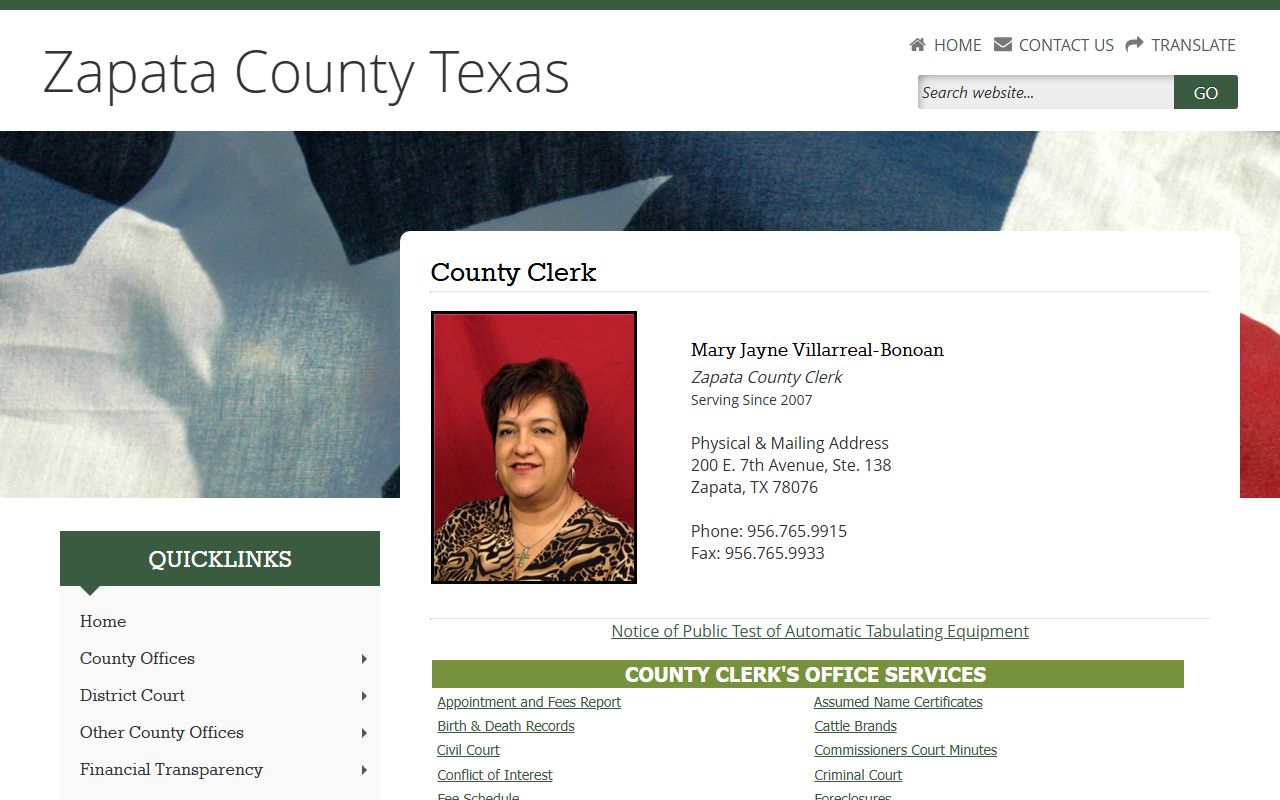
That clerk page is the practical bridge between a jail arrest and a filed misdemeanor case because it points users toward the local court record tools rather than a jail roster.
Find Court Records After a Zapata Arrest
The first task is to decide which court owns the charge. The Zapata County Court page states that the county judge has jurisdiction over county court matters consisting of Class A and B misdemeanors. The 49th District Court page lists criminal jurisdiction for district-court matters and serves Webb and Zapata counties. The District Clerk page says that office keeps custody and maintenance of district court records and indexes parties and judgments.
- Check current custody through VINELink first, then call the correct jail if the person is newly booked or not found.
- Identify the offense level from bond paperwork, jail confirmation, citation papers, or clerk information.
- Use the County Clerk's LGS Case Search for cases available through that portal, or call the County Clerk or District Clerk for routing.
- Search by defendant name. If a case number appears on paperwork, use it because common names can produce false matches.
- Compare jail booking charges with filed court charges, because prosecutors may amend, reduce, dismiss, or add counts.
The Local Government Solutions case-search page is linked by the county clerk as LGS Case Search, but the research could not fully inspect every Zapata field inside the vendor portal.
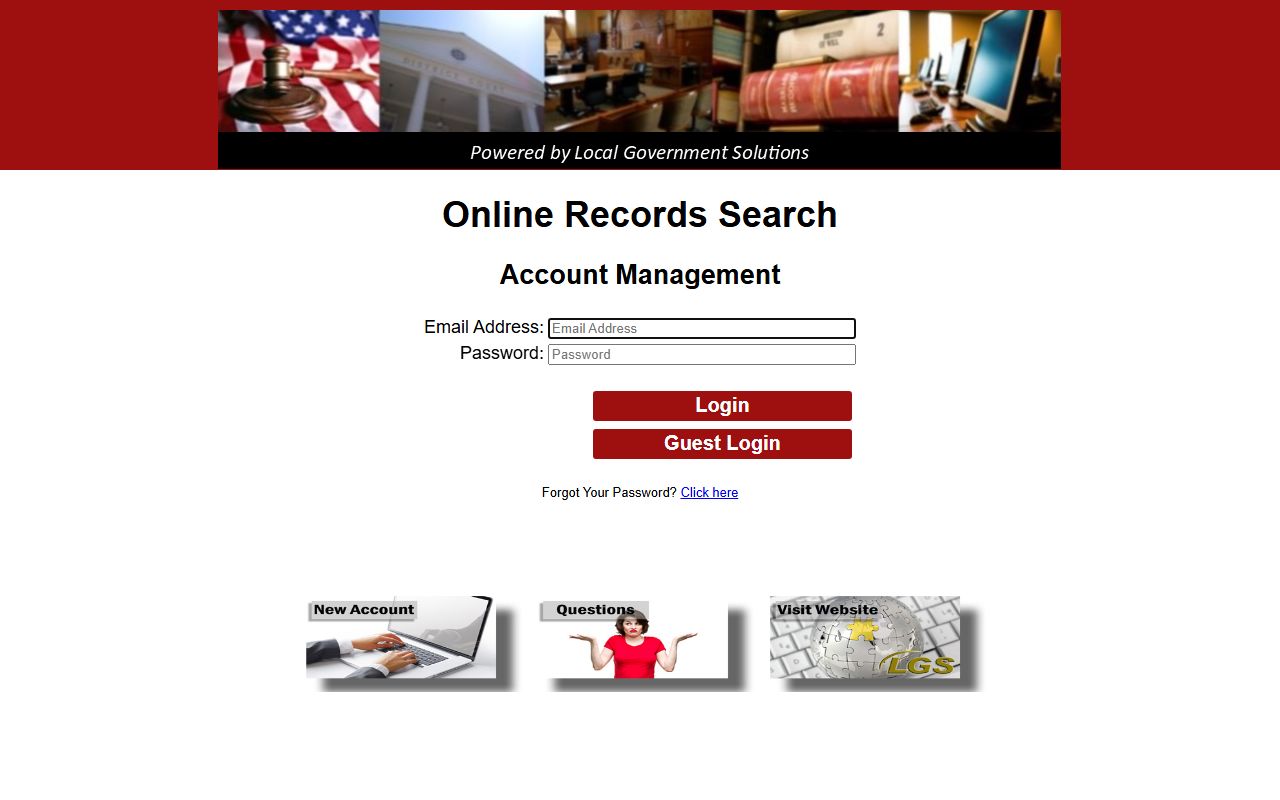
Use LGS as a case-search starting point, not as a complete substitute for clerk confirmation when a charge, bond status, or disposition must be exact.
Zapata County LGS Court Search
The local court record search should be treated as a clerk index. It can help locate a case after an arrest, but it does not replace the jail's custody confirmation and does not prove that every arrest resulted in prosecution. If a newly arrested person has not yet had a case filed, the court search may lag behind the jail event.
| Search Path | Type | Required | Use in Zapata County |
|---|---|---|---|
| LGS Case Search | Portal link | No account noted in research | Linked by the County Clerk for case search access. |
| Name or party | Text field | Varies by portal screen | Use defendant names with careful spelling and date checks. |
| Case number | Text field | Optional if known | Most useful when obtained from bond papers, clerk notices, or court paperwork. |
| Court or county filter | Portal selection | Use when offered | Select Zapata County when the portal asks for county or court context. |
Court Charges After a Jail Arrest
A jail arrest does not always produce the same court charge that appeared during intake. The arresting officer may book a person on one suspected offense, then the county attorney or district attorney reviews the file and chooses what to file. The Zapata County Attorney page says the office works with law-enforcement officers in investigation and preparation of criminal cases. For district-level prosecution, the official District Attorney listing gives the Webb County Courthouse contact for the judicial district that serves Zapata.
| Document | Who Uses It | Common Role | Record Meaning |
|---|---|---|---|
| Complaint | Officer or prosecutor | Early sworn accusation or probable-cause filing | May support arrest, initial charge, or case opening. |
| Information | Prosecutor | Common for misdemeanors and some waived-indictment matters | States the formal charge filed by the state. |
| Indictment | Grand jury | Felony charging instrument | Shows that a grand jury returned formal felony charges. |
For misdemeanor court records after a Zapata County arrest, the County Attorney, County Court, and County Clerk are usually the local offices to check. For felony court records, the District Attorney, 49th District Court, and District Clerk become more important. Court staff can identify the record custodian, but they cannot provide legal advice about how to answer the charge.
Zapata Court Charge Status
Charge status terms show the current life of a count in court. A person may be arrested, released on bond, and later have the case amended or dismissed. Another person may have a pending charge and still be held because of a warrant, parole issue, federal hold, or immigration detainer. That is why custody status, charge status, and final disposition should be checked as separate facts.
| Status | What It Means | Why It Matters |
|---|---|---|
| Pending | The case or count is still open. | No final conviction or dismissal should be assumed. |
| Amended | The filed charge or document changed. | The court charge may no longer match the booking charge. |
| Reduced | The offense level or charge was lowered. | Bond, court, and sentencing exposure may change. |
| Dismissed | The charge ended without a conviction on that count. | Eligibility for expunction or nondisclosure may depend on full case facts. |
| Disposed | The case has a recorded outcome. | The disposition should be read before describing the result. |
| Capias | A court arrest process, often tied to nonappearance. | A person may be booked again even after the original arrest. |
Bond After a Zapata Arrest
Texas bail rules come from Code of Criminal Procedure Chapter 17. Article 17.15 lists factors for setting bail, including reasonable assurance of appearance, the nature of the offense, ability to make bail, and future safety of the victim and community. In Zapata County, payment method, bond desk hours, and jail release procedures were not published in the jail sources reviewed, so the practical path is to confirm the current bond status by calling the facility before money or paperwork is sent.
| Bond Type | How It Works | Local Caution |
|---|---|---|
| Cash bond | Money is deposited with the court or jail as required. | Ask where payment is accepted and whether fees apply. |
| Surety bond | A licensed bail bond company posts the bond for a fee. | Release is not final until the jail or court accepts the paperwork. |
| Personal or PR bond | Release is based on promise and conditions rather than full cash deposit. | Conditions still matter and can affect later warrants. |
| No-bond hold | The person cannot be released on that matter. | Another agency hold can block release even when local bond is posted. |
The Zapata County Court page adds a local warning for misdemeanor court. It states that failure to appear may result in bond forfeiture and issuance of a capias. The same page says plea bargains should be handled before court with investigators at the County Attorney's Office, with the published county attorney phone used for late arrangements when a person cannot come during the posted weekday window.
Warrants and Court Arrest Records
No official Zapata County active-warrant search page was located in the county sources. A warrant can still be central to court records after a jail arrest. An arrest warrant may start the custody event. A bench warrant or capias may follow a missed court date. A fugitive hold, parole hold, federal matter, or immigration detainer can keep a person in custody even when a local charge has a bond amount.
Check warrant-related records through the office that likely issued or maintains the case. The Sheriff's Office can route law-enforcement and custody questions. The Regional Jail and Women's Jail can confirm whether a person is held on a warrant or hold when staff are able to release that information. The County Clerk and County Court are the local path for county-level misdemeanor capias issues, while the District Clerk and 49th District Court handle district-court case records. Justice of the Peace courts may be relevant for citation and lower-court matters, but no official county warrant lookup was found.
Charges vs Convictions
A charge is an accusation. A conviction is a court outcome after a guilty plea, no-contest plea accepted by the court, jury verdict, or judge finding. Zapata County court records after an arrest should be read with that difference in mind. A person can have a public arrest, a pending charge, or a dismissed count without having a conviction for that offense.
| Record Point | Charge | Conviction |
|---|---|---|
| Stage | Accusation filed or alleged after arrest | Final or adjudicated court result |
| Proof level | Probable cause or prosecutor filing decision | Proof beyond a reasonable doubt or accepted plea |
| Can change? | Yes, it can be amended, reduced, added, or dismissed | May be appealed, set aside, sealed, or expunged only through legal process |
| Where checked | Jail record, clerk index, charging document | Court disposition, judgment, sentence, clerk record |
Sealed or Expunged Records
Texas public access starts with the Public Information Act, but some records are restricted. Juvenile records, medical information, victim information, ongoing investigation material, sealed cases, and expunged records may be withheld. The Texas Attorney General's public-information materials explain that basic information about an arrested person, an arrest, or a crime may remain public even when other law-enforcement details are withheld, but that does not make every file or image available online.
| Access Limit | Nondisclosure or Sealing | Expunction |
|---|---|---|
| Basic effect | Limits public access to eligible records. | Removes or destroys qualifying criminal records as allowed by law. |
| Texas source | Clerk pages link to nondisclosure information for eligible cases. | Code of Criminal Procedure Chapter 55. |
| Common trigger | Eligible disposition after court process. | Acquittal, dismissal, certain pardons, or other qualifying outcomes. |
| Public search impact | The record may be hidden from most public searches. | The record should not be treated as a public arrest record once the order applies. |
A person relying on a sealed, nondisclosed, or expunged result should use the signed court order, not a casual web lookup, to resolve errors with agencies or record holders.
Background Check Limits
Casual court lookups are not the same as a lawful employment, tenant, credit, insurance, or licensing background check. Texas Government Code Chapter 411 governs the state criminal-history record information framework, and the Texas DPS Criminal History Name Search is a separate statewide tool. A county clerk docket may show a local case, but it may not show out-of-county cases, sealed matters, or the full statewide criminal-history context.
Important: Public case lookups are not consumer reports and should not be used for FCRA-covered decisions.
Restricted Zapata Court Records
When a Zapata County court record follows an arrest, the public file may still have limits. The sheriff, clerk, prosecutor, or court can withhold material when a statute or valid exception applies. Common restricted areas include juvenile matters, victim details, medical information, confidential identifiers, security records, and some active investigative content. If a record is missing from public search, the next step is not to assume it does not exist. Contact the clerk of the court that would hold the case, or send a focused Public Information Act request to the governmental body that maintains the jail or law-enforcement record.
For current jail custody, use VINELink plus the facility phone. For filed charges, use the clerk and court channels. For sentenced state custody after a Zapata conviction, use the TDCJ inmate search. Federal sentenced custody belongs in the BOP inmate locator, and immigration custody is checked through ICE ODLS.